A material can pass a tensile test with flying colours and still behave very differently when subjected to a sudden impact. As engineers develop lighter, thinner and more sophisticated materials for increasingly demanding applications, understanding this difference is becoming more important. Here Andrea Incardona, materials specialist at tensile testing instrumentation manufacturer Instron, explains why high-strain-rate testing can reveal material behaviour that conventional testing may miss.
Understanding how a material performs under impact requires more than conventional tensile testing. Quasi-static tests remain important for establishing properties such as strength and stiffness, but they may not capture how a material responds when force is applied in milliseconds. For strain-rate-sensitive materials, this can significantly influence stiffness, strength, ductility and failure behaviour.
The changing demands on materials
The relationship between loading rate and material behaviour is particularly important for polymers, plastics, films and composites. Under quasi-static conditions, a material may appear sufficiently ductile and capable of absorbing deformation. However, as strain rate increases, some materials become stronger and stiffer while losing ductility, potentially changing both how and when they fail.
A 2025 study of unidirectional carbon-fibre-reinforced polymer composites found significant strain-rate strengthening across all three principal material directions. At high strain rates, measured strength increased by 72 per cent in the fibre direction, 68 per cent transversely and 76 per cent through the thickness, demonstrating the extent to which loading rate can influence material response.
This creates a challenge for engineers developing products that may encounter rapid loading. If material characterisation only provides data from slow, controlled tests, engineers may have to extrapolate this information to predict dynamic behaviour. High-strain-rate testing provides a way to directly characterise material response under more representative loading conditions.
Where high-strain-rate behaviour matters
Electric vehicle battery development provides a clear example of why this distinction matters. Battery separator films sit between the anode and cathode and must maintain their integrity under demanding conditions. During short-duration events, these thin materials can experience extremely high strain rates, with deformation occurring in just milliseconds. At these rates, material behaviour can change, making it important to understand properties such as resistance to tearing and puncture, as well as shutdown behaviour.
If a separator ruptures, the resulting internal short circuit can contribute to overheating and, in severe cases, thermal runaway. High-strain-rate characterisation provides engineers with data that better reflects these mechanical conditions.
The same principle applies to composites used in aerospace and other lightweight structures. Their behaviour can depend on factors including fibre orientation, resin system and interfaces between layers. Under shock loading, these variables can influence failure, delamination and stiffness. High-strain-rate testing can help engineers understand these effects and generate more representative data for material selection and design.
The requirement for dynamic data also extends to consumer electronics and packaging, where thin films, adhesives and laminates can experience rapid deformation during manufacturing, handling and use.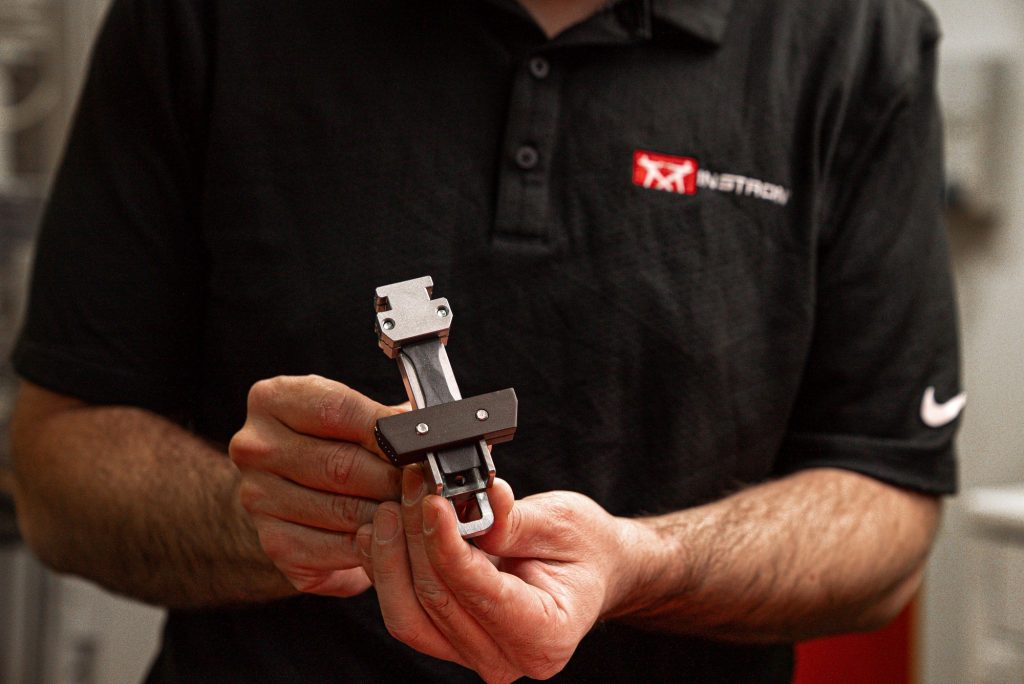
Building a complete picture
High-strain-rate testing is not intended to replace conventional tensile testing. Instead, it adds another dimension to material characterisation by showing how properties change as the rate of loading increases.
The difference between the two test conditions demonstrates why relying solely on quasi-static data can be misleading when a material is expected to experience rapid loading. Properties such as strength, stiffness and elongation can change with strain rate, meaning that material selection and design decisions based only on conventional test data may not fully reflect real-world behaviour.
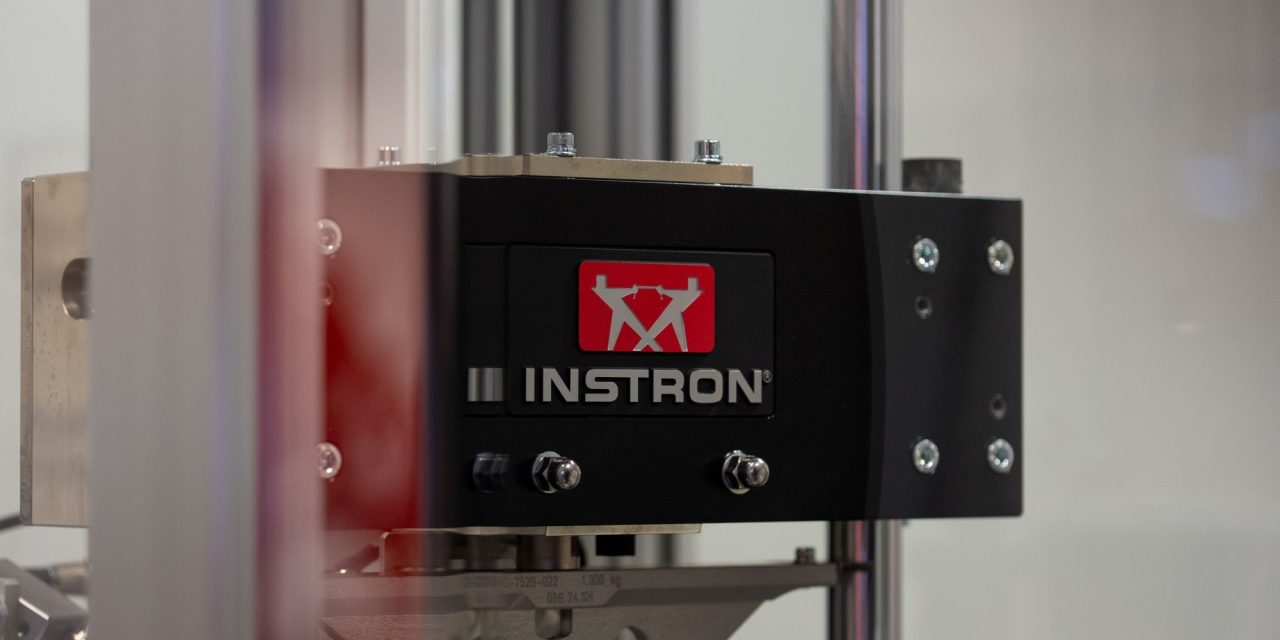
Drop tower systems can apply controlled, high-velocity loads to specimens and capture the resulting force and deformation response. This allows engineers to measure properties such as tensile impact strength and energy absorption while also examining how and when a material fails.
However, generating useful dynamic data requires careful control of the test itself. Specimen preparation, alignment, gripping and instrumentation can all influence the resulting measurements. This is particularly important for small specimens, thin films and composites, where defects, slippage or stress concentrations can introduce variability.
High-speed imaging and Digital Image Correlation (DIC) can provide additional insight. By mapping strain across a specimen during a rapid event, these techniques can reveal how deformation develops and where failure initiates. This is particularly valuable for composites, where anisotropic behaviour can produce different responses depending on measurement direction.
The result is a more complete understanding of material behaviour, capturing not simply how strong a material is under controlled, slow loading, but how it responds when subjected to the conditions it may encounter in service.
From testing to better engineering decisions
The value of high-strain-rate data extends beyond understanding a single material’s response. Reliable characterisation can support material selection, product development and the validation of numerical models. By quantifying properties such as tensile strength, stiffness, fracture behaviour and energy absorption across different loading conditions, engineers can build a stronger evidence base for design decisions.
High-strain-rate data can also be used to improve computer-aided engineering. The resulting data can then be used beyond the laboratory. Understanding how a material responds across different loading rates can support material selection, help identify failure mechanisms and provide greater confidence when developing components that may experience impact or shock loading. It can also provide valuable inputs for computer-aided engineering, helping models more accurately reflect real material behaviour.
For engineers developing increasingly complex materials and products, the benefit is therefore not simply another set of test results. It is a more representative understanding of material behaviour that can support decisions throughout the development process.
Passing a tensile test is only part of the story. When materials are expected to withstand impacts, crashes or other rapid loading events, understanding how they respond under those conditions is just as important. High-strain-rate testing can help reveal the differences that conventional testing cannot, giving engineers a more complete picture of how materials will perform when subjected to real-world demands.
Want to learn more? Instron’s e-guide, ‘Mastering impact: a modern guide to tensile impact strength testing with drop towers’, explores the principles and applications of tensile impact testing in greater detail. Download it here.
Read other recent news: https://industrial-compliance.co.uk/category/news/