Never before have we witnessed technological progress at such pace, with AI, quantum computing and advanced robotics just a few of the areas that have seen remarkable advancements in recent years. The manufacturing industry sits at the heart of these changes, responsible for creating, testing and maintaining many of the systems that underpin these modern technologies. However, keeping pace with this innovation requires new skills and a growing workforce. Unfortunately, the reality we face is currently the opposite.
With a growing skills gap as fewer people enter the workforce, the industry is at risk of falling behind due to a lack of people to sustain it. It is clear there must be a greater push for more talented workers to enter the industry to close this gap and ensure future innovation is supported by a capable workforce.
The state of modern manufacturing
For many, the idea of manufacturing conjures up images of machines and production lines. However, as the industry modernises, Mark Christie, Field CTO at StorMagic, explains that it is increasingly reliant upon “an invisible layer of resilient technology.” There is a myriad of deeper technological systems beyond the physical machines on the factory floor, such as those inside data centres that gather and process the information needed to keep machinery moving.
Christie expands on this: “The need for these systems to respond quickly and continuously highlights a wider challenge that today’s manufacturers face. Operational teams often prioritise uptime, aiming to keep factory systems running without changes that could cause disruption. IT teams place greater focus on regular updates and standardised systems. These competing objectives can make it difficult to modernise factory technology without affecting production.
“The key is finding a way for operational and information technology to work in tandem, with infrastructure that supports both stability and modernisation.”
To do this successfully, many manufacturers are replacing legacy hardware and modernising their existing systems, using the capabilities of AI and the power of automation. As Duncan Ferguson, Managing Director of Epson UK Ltd., says: “Manufacturing is entering one of its most significant periods of change in decades. AI, automation and integrated production systems are revolutionising how factories operate.”
While there is currently a lot of hype around AI, automation and robotics, Ferguson notes that “manufacturers also need practical technologies that deliver speed, precision and efficiency in core applications. This is becoming increasingly relevant as automation continues to expand beyond the automotive market into semiconductors, electronics, new energy, food and beverage, and logistics sectors.”
However, in light of these advancements, he argues that “technology alone will not determine the industry’s future. The people with the skills to apply it will.”
“Technology only delivers when the people behind it understand manufacturing well enough to use it well,” agrees Leanne Taylor, CEO at Syspro. In her view, the workforce needs support and upskilling to operate efficiently in an industry that is becoming more digital and AI-enabled.
She continues: “Manufacturers want to grow, but the skills they need aren’t easy to find. AI can help close that gap, scaling the knowledge of experienced operators across the business and helping people newer to the industry make better decisions faster.
“But generic AI tools weren’t built for manufacturing. Industry-specific solutions let teams build and manage AI workflows without coding expertise, while keeping full visibility into how recommendations are made and which actions are being delegated. That combination of industry knowledge and transparent AI is what actually moves the needle.”
Simon Bowes, CVP Manufacturing Industry Strategy EMEA at Blue Yonder, echoes these sentiments, stating: “Addressing the industry’s skills gap means attracting new talent while also equipping today’s workforce with the digital and technical capabilities needed to work alongside increasingly intelligent systems.”
For Bowes, “we are already seeing manufacturers move beyond traditional automation towards cognitive operations that can predict, learn and adapt. AI and agentic automation can bring people, robotics, inventory and fulfilment together, helping organisations anticipate demand, dynamically allocate resources and respond to disruption. Rather than replacing people, this creates opportunities for higher-value roles in areas such as data, intelligent planning, automation management and sustainability.”
Bolstering tomorrow’s workforce, today
Throughout the industry, organisations are facing growing pressure to build a workforce prepared for these changes. A recent survey from Make UK found that half of UK manufacturers say skills shortages are currently their biggest barrier to growth, with 55,000 long-term vacancies across the industry. However, there is a drive to address this deficit, with 99% saying access to skills will shape their future growth plans.
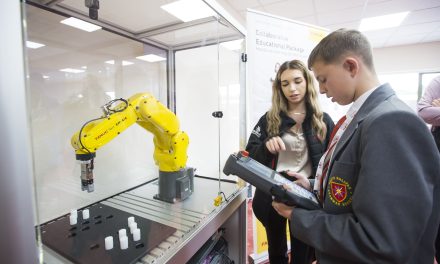
For Epson’s Ferguson, “closing that gap means investing in existing employees through training and upskilling, while building stronger connections with schools, colleges and local communities to inspire new talent. The next generation should see manufacturing for what it increasingly is: a technology-led industry where skilled people have interesting and rewarding jobs which are fundamental to turning innovation into greater productivity, resilience and growth.”
Sharing these concerns, Claire Hu Weber, Vice President of International Markets at Fluke Corporation, warns: “It’s no longer just ‘important’ to bring young people into manufacturing, it’s mission critical. In the UK, more than half of manufacturers expect up to a fifth of their workforce to walk out the door into retirement within the next decade.
“Add to that the fact that women make up barely a quarter of the UK manufacturing workforce, we don’t only have a lacking workforce pipeline but a lack of diversity too. Unless we move fast to attract new talent and break down the barriers that keep women from entering and staying in the industry, we’ll lose not just capability, but the diversity of thinking that fuels real innovation and growth.”
Paraic O’Lochlainn, VP at eMaint, reinforces these issues, highlighting how, “as experienced workers leave industry, so does the judgement built through trial, error and high-stakes decision-making. The next generation is not looking to relearn everything the hard way. They expect smarter tools, fewer avoidable mistakes and careers that are sustainable – mentally, physically and professionally. While manufacturing itself has changed, it is no longer a dark, smoky backroom of the economy. It is becoming one of the most technology-intensive arenas for AI, data and automation.”
Building upon existing foundations
While increased recruitment is key to boosting the workforce and closing the skills gap, Will Eadie, Chief Strategy Officer at WorkJam, argues that “retention deserves just as much attention as recruitment.” He highlights that “recent research found 52% of manufacturers have reduced or slowed hiring over the past six months. At the same time, employee engagement and retention were the most-cited workforce challenges after cost reduction.
“The manufacturing industry is only as strong as its workforce. With recruitment slowing, skills remaining scarce and AI adoption accelerating, manufacturers need to focus on the capabilities they already have as well as those they need to build. That means ensuring frontline employees are connected to the organisation, can access the information they need and have a clear way to make their voices heard. Combined with the support employees need to use emerging technologies effectively, stronger communication will be essential to turning new technology into greater productivity and long-term resilience.”
Jesus Hernandez, Senior Vice President, EMEA at AVEVA, agrees that supporting the existing workforce is just as important as driving recruitment. For Hernandez, the key is to make the most of the talent available and improve internal measures to help close the skills gap. He advises that “active mentoring from experienced team members can build essential understanding, enabling newer employees to learn why decisions are made, from meeting safety and regulatory requirements to navigating complex technical processes. AI can also support this transfer of knowledge, with LLMs providing a valuable interface between people and complex industrial information.
“Combining technology with mentoring can help manufacturers preserve critical expertise and equip the next generation of workers to operate safely and confidently in increasingly digital industrial environments.”
Now is the time for organisations across the industry to drive forward change within their own ranks, supporting and upskilling existing teams, while reaching out to inspire the next generation of talent that will shape its future. If action is not taken now, the chance to do so will only grow smaller as time goes on.
Read other recent news: https://industrial-compliance.co.uk/category/news/