In this article, Abigail Morrison, senior associate solicitor at JMW Solicitors, provides an overview of spotting asbestos in industrial settings.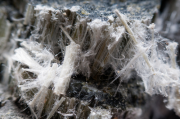
Industrial and residential buildings constructed before the year 2000 have the potential to contain asbestos. This substance, which was widely used in construction before it was banned, contains harmful fibres that can be released and inhaled by individuals in the immediate vicinity. Prolonged exposure to these substances can cause serious health problems for those affected, and in many cases, the symptoms do not present themselves until many years later.
The dangers of asbestos-related illnesses can impact people who are exposed to even the smallest levels of asbestos, which means personnel – such as builders, contractors or teachers – are at a higher risk of contracting illnesses related to asbestos.
Unfortunately, due to the high number of common building materials that contain asbestos, coupled with the widespread nature of its use prior to 2000, it can be particularly difficult to detect.
Asbestos in an industrial setting
All industrial and commercial property types are different, and the presence of asbestos-containing fibres can depend on the organisation that originally constructed the building – and the work that was carried out before you moved in. While the use of asbestos in construction was banned in 1999, there is still a high chance that it could be present in an industrial setting.
There are three types of asbestos fibre that are usually found in places of work:
- Crocidolite (blue asbestos)
- Amosite (brown asbestos)
- Chrysotile (white asbestos)
Where can asbestos be found inside a building?
Find out where asbestos fibres are most commonly found in an industrial setting below.
1. Sprayed coatings
Coatings sprayed on to ceilings, walls, beams and columns are among the most dangerous materials found to contain asbestos in an industrial building. Statistics show that these materials can contain up to 85% asbestos, which can break up very easily, making it more potentially harmful to the health of employees. Even the smallest disturbance of sprayed coatings can release large quantities of asbestos into the air.
2. Asbestos cement water tank
Drainage pipes and water tanks were commonly built using pitch fibre, a lightweight material produced from wood cellulose and impregnated with inert coal tar pitch. Asbestos cement was often added to strengthen the material.
3. Loose-fill insulation
This is thought to be the most dangerous asbestos-containing material. Loose-fill is made up of pure asbestos and, if disturbed, can release large quantities of fibres into the air.
4. Lagging on boilers and pipes
Another of the most dangerous asbestos-containing materials. Those exposed to it are more at risk from breathing in asbestos fibres due to the disturbance of lagging or insulation, which very easily release fibres into the air.
5. Asbestos Insulating Board (AIB) ceiling tiles
Carrying out work on any type of asbestos-containing substance can be dangerous, but some short-duration activities for minor tasks on AIB can be carried out by non-licensed workers. Short-duration work is classified as less than one hour for one person in a seven-day period, not to exceed two hours spent by all workers.
6. Toilet seats and cisterns
Asbestos composites are often found in old toilet cisterns and seats, as well as window sills and bath panels. These materials are similar to those used in current manufacture.
7. AIB partition walls
In previous years, AIB has been used as a fireproofing material, but also had many additional uses, including:
- Partition walls
- Fireproofing panels in fire doors
- Lift shaft linings
- Ceiling tiles
- Soffits
- Panels below windows
- Boiler surrounds
8. AIB panels in fire doors
Short duration work to remove AIB as part of building demolition or major refurbishment would need to be reported to the Health & Safety Executive.
9. Asbestos rope seals, gaskets and paper
Asbestos rope seals and gaskets are usually located in gas or electric heating appliances.
10. Vinyl floor tiles
Asbestos floor tiles were extremely popular and found in many buildings. Old tiles containing asbestos can sometimes be found hidden under carpets that have been laid on top.
11. Textiles
Textiles, such as old asbestos-containing fire blankets, are often found behind the fuse itself, while old fire blankets and heat-resistant gloves can be made out of asbestos textiles.
Where asbestos can be found outside a building?
In many cases, asbestos-containing materials are found on a building’s exterior.
1. Roof panels
Asbestos roof panels are mostly made up of large sheets of corrugated asbestos cement. They are often found on industrial or farmyard buildings, as well as roofs of garages and sheds.
2. Cement gutters and downpipes
Usually attached at the end of cement roofs of warehouses.
3. Soffits – AIB or asbestos cement
As with all asbestos insulation boards, AIB soffits must be removed by a licensed asbestos removal contractor who is trained in taking the required precautions.
4. Asbestos cement flue
Often located in boiler systems, air conditioning and ventilation systems.
The impact of asbestos-related illnesses on the lives of the people who contract them can be devastating. We have worked with countless families who have lost a loved one as a result of mesothelioma or another asbestos-related illness and have seen first hand the destruction that such an event can cause. Businesses need to do more to ensure that their buildings are checked for asbestos, and while the law states that if left undisturbed asbestos is harmless, removal is often the safest option.