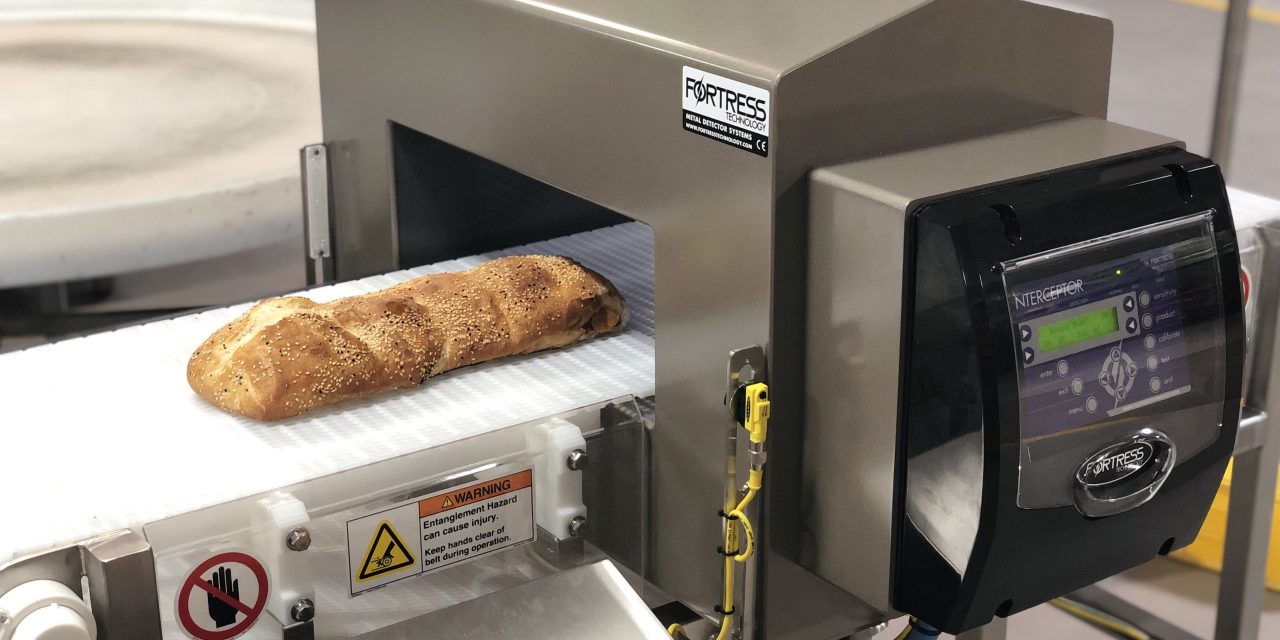
Fortress Technology’s latest white paper provides updated insights into metal detector performance, the factors that influence detection sensitivity and best practices for maintaining effective inspection and strengthening food safety programmes.
Food metal detectors provide more than just ‘box on a belt’ protection. They play an essential role in protecting consumers, maintaining product quality and supporting efficient food production. As processing requirements evolve, manufacturers must continually assess how metal detection systems are integrated into their food safety programmes and Hazard Analysis and Critical Control Point (HACCP) plans.
Although modern metal detectors are designed for straightforward operation, achieving reliable inspection performance requires more than selecting the right equipment. Product characteristics, installation conditions, testing procedures and ongoing maintenance can all influence detection performance and overall effectiveness.
Fortress Technology founder and president Steve Gidman addresses some of the most common metal detection questions customers ask.
1. How do food metal detectors identify contaminants?
Metal detection technology has advanced considerably in recent years. However, the fundamental principles remain the same. Most food metal detectors use electromagnetic fields to identify metal contaminants in products as they pass through the aperture.
Different detection technologies are available to accommodate specific applications and packaging requirements. Understanding these differences is an important starting point when selecting the most suitable inspection system.
2. Does the type of metal affect how easily it can be detected?
Yes. Differences in the magnetic and conductive properties of metals affect how easily they can be detected.
Ferrous, non-ferrous and stainless steel contaminants each present different detection characteristics. Understanding these differences, along with the influence of product and processing conditions, is essential for establishing realistic inspection requirements.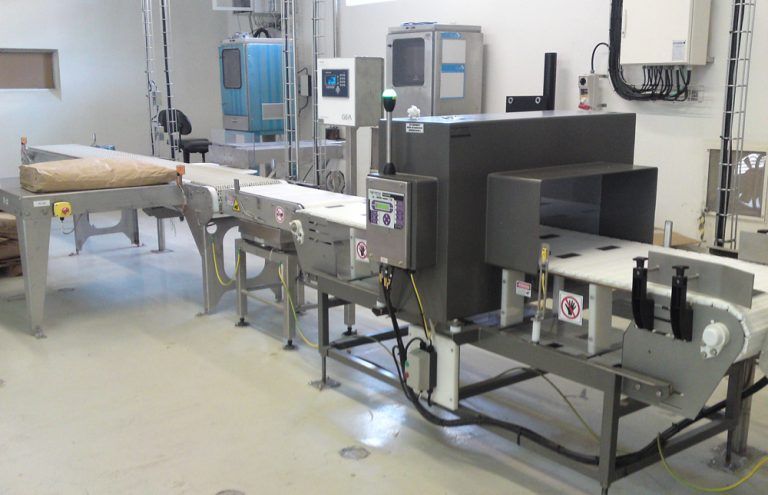
3. Can metal contamination originate at any stage of production?
Metal contamination can enter the production process at multiple points, from raw material handling to final packaging. Equipment wear, damaged components and other manufacturing activities can introduce foreign material into food products.
The type, size and orientation of metal contaminants also affect how easily they can be detected. Establishing appropriate critical limits and following consistent performance verification procedures are important considerations within an effective food safety programme.
4. Why do some foods mimic metal?
Certain food products naturally generate a signal when passing through a metal detector. Known as product effect, this is commonly associated with factors such as moisture, salt content and temperature, as in bread that is still warm. It can also occur in products enriched with iron.
Product effect can make it more challenging to distinguish between the product itself and potential metal contamination. Understanding how product characteristics influence performance is an important part of achieving reliable detection while minimising false rejects and unnecessary food waste.
5. How do ‘smart’ metal detectors manage product effect?
Advances in metal detection technology have improved how inspection systems handle challenging product characteristics and changing production requirements.
Simultaneous multi-frequency technology is designed to address product effect. It can offer advantages over traditional single-frequency systems in applications such as convenience meals, meat and cheese. Selecting the appropriate technology and optimising inspection settings can help manufacturers improve detection performance.
6. What is the most effective inspection configuration?
The most effective metal detection configuration depends on the product, production environment, contamination risks and the requirements identified through a HACCP assessment.
From incoming ingredients to finished packaged products, metal detectors can be incorporated at different stages of production. Conveyor, pipeline, gravity and combination systems each offer advantages depending on the application.
Careful consideration of equipment placement, product handling and reject system design helps ensure effective contamination control without unnecessary production disruption.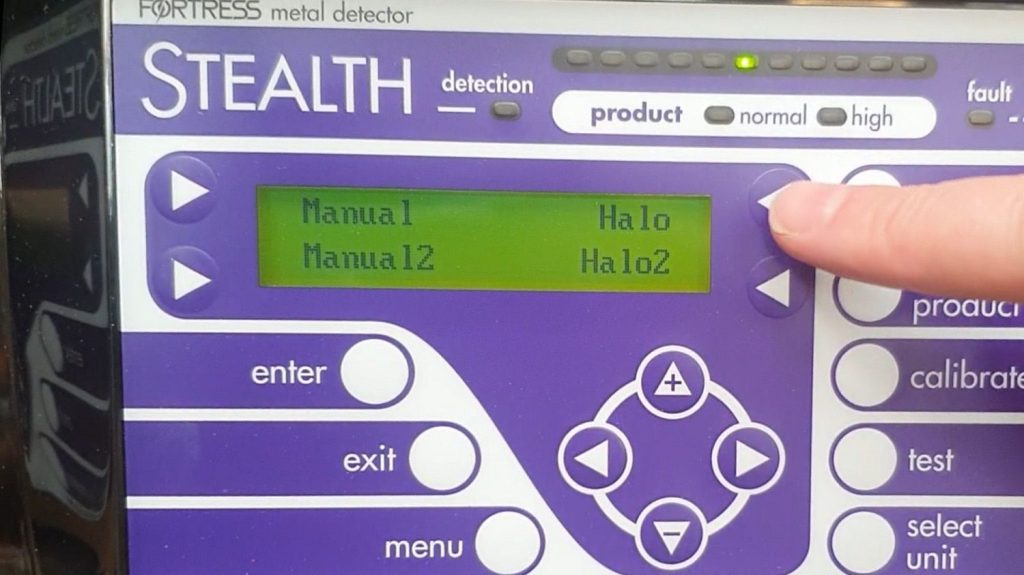
7. How do metal detectors and X-ray systems work together?
Metal detection and X-ray inspection are complementary technologies, each offering distinct advantages in food safety applications. Metal detectors are designed to detect ferrous, non-ferrous and stainless steel contaminants, making them a proven and cost-effective first line of defence against metal contamination.
X-ray systems provide additional inspection capabilities by detecting other foreign materials, such as glass, stone and calcified bone. When used together, these technologies can provide more comprehensive contamination control, depending on the product, application and identified food safety risks.
8. How do these features help production teams?
Reliable inspection performance depends on both effective technology and consistent operating procedures. Even the most advanced inspection systems require proper set-up, regular performance verification, maintenance and accurate record-keeping.
Fortress Technology offers tools such as the Halo Automatic Testing System and Contact 4.0 to help manufacturers automate routine inspection activities, reduce manual intervention and improve access to inspection records.
Combined with operator training and established food safety procedures, these technologies can help manufacturers maintain inspection consistency, improve operational efficiency and support audit readiness.
Strengthen your first line of defence
Understanding the factors that influence metal detection can help manufacturers improve inspection performance, reduce unnecessary rejects and strengthen their food safety programmes.
For a closer look at metal detection fundamentals, testing practices and performance considerations, download Fortress Technology’s latest white paper.
Read other recent news: https://industrial-compliance.co.uk/category/news/