Kiwa, one of the country’s leading product safety certification providers, has supported the success of motorsport days at Silverstone, thanks to a comprehensive spectator barrier testing programme conducted at the iconic racetrack.
With thousands of motorsport fans flocking to the legendary home of the British F1 Grand Prix and MotoGP, fan safety is a top priority for the racetrack’s management, as well as the need to comply with current safety regulations for sports grounds.
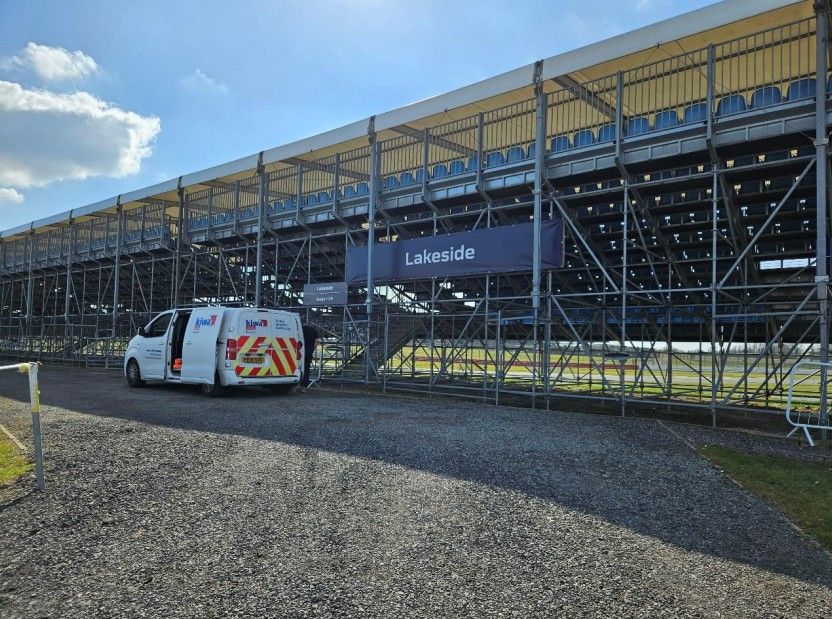
The Silverstone site has 25 permanent and temporary grandstands, each housing fans who want a close view of the track action. Ensuring they do so safely and securely requires constant attention to assess the performance of the important viewing structures.
Driving barrier testing
A critical aspect of maintaining a safe environment is the requirement for rigorous barrier testing to ensure total confidence in structural integrity and performance for optimum crowd control and the prevention of unwanted falls.
Delivering a strategy of enhanced safety means undertaking regular risk assessments and testing regimes as part of programmes to identify and address potential safety issues before they can lead to accidents.
Kiwa worked with the DSA Group to undertake barrier tests on several structures including the BRDC, COPSE, Lakeside and Luffield stands. All the testing was undertaken in accordance with Chapter 11 of the ‘Guide to Safety at Sports Grounds’ sixth edition, 2018.
Chris Forshaw, Construction & Utilities Cluster Director at Kiwa, comments: “Offering a strong track record in testing sporting structures and leisure facilities, we worked with the DSA Group to carry out a testing programme for several spectator stands at Silverstone. With massive crowds regularly attending world famous events at the venue, such testing ensures a safe environment for all and meets the prevailing safety standards.”
The programme involved applying test loads centrally between supports using hydraulic cylinders. The loads were measured with a calibrated pressure gauge and deflection monitored using dial gauges at the point of maximum movement.
Each test also included a bedding cycle conforming to the design force, followed by two applications of the test load. The deflection and recovery data were then used to assess compliance with the safety specifications.
Following the testing procedures, all the barriers at Silverstone were found to comply with the required safety standards, delivering confidence to the management team that the venue remains a safe and secure place for fans to gather and enjoy exciting motorsport racing.
Chris Forshaw concludes: “For those charged with operating and managing heavily used spaces such as sports arenas and other leisure facilities, visitor safety is the number one priority.”
For more information about Kiwa’s testing services, please visit: Structures Testing
Read other recent news: https://industrial-compliance.co.uk/category/news/