Across critical sectors such as healthcare, telecommunications and industrial operations, standby generators often sit unused for long stretches. In many cases, they only run when there’s an unexpected outage. Over time, it can affect key components like fuel quality, battery condition and control stability, and routine start-up checks don’t always pick this up. Here, Andrew Keith, division director of load bank manufacturer Power Prove, explains why low utilisation itself poses a technical risk to standby systems and how regular load bank testing helps ensure operational readiness.
Recent infrastructure events across the UK have continued to highlight the importance of resilient power systems across critical services. In March 2025, the North Hyde substation experienced a major outage, according to the National Energy System Operator (NESO), resulting in the “loss of all supplies from the North Hyde 275kV substation.”
The incident disrupted Heathrow Airport operations and affected surrounding infrastructure, including transport networks, hospitals and local homes and businesses. Several data centres connected to the same network were able to maintain operations by relying on backup generators. It’s a clear reminder of how important standby power is in keeping essential services running during major grid failures.
Low utilisation risks in standby systems
Standby generators are commonly subjected to routine no-load or low-load start-up exercises to confirm that systems can switch on when required. While useful as a basic operational check, these short tests do not always reveal how a generator will perform under sustained demand conditions.
Generators are designed to operate within a defined load range where combustion temperatures and engine pressures remain stable. When diesel generators run at less than around 30 per cent of their rated load for extended periods, the risk increases. This tends to happen when systems are running well below their intended capacity over time, fuel combustion becomes less efficient, increasing the likelihood of carbon deposits forming within the engine and exhaust system.
One of the most common consequences is wet stacking: where unburned fuel, soot and residue accumulate in the exhaust due to incomplete combustion. Over time, wet stacking can reduce engine efficiency, increase maintenance requirements and contribute to long-term component wear.
Why routine checks may not be enough
Extended inactivity can also affect fuel stability, battery condition and electrical control systems. Because standby generators are only expected to operate during emergencies, faults may remain hidden until the system is suddenly required to support critical infrastructure during a power outage.
That can be a real challenge for sites where power continuity is essential. This includes hospitals, telecommunications infrastructure, manufacturing plants and industrial processing environments. In these settings, even short interruptions to backup power capability can have significant operational and financial consequences.
Events like the North Hyde outage show how important standby systems are during major disruptions. They also highlight a wider issue. Installing backup generation alone does not guarantee performance. Routine inspections might confirm a generator starts, but that does not always show how it will cope under sustained load. Without sufficient loading, underlying issues affecting cooling performance, voltage regulation or fuel delivery may remain undetected until the generator is operating under emergency conditions.
How load bank testing supports generator readiness
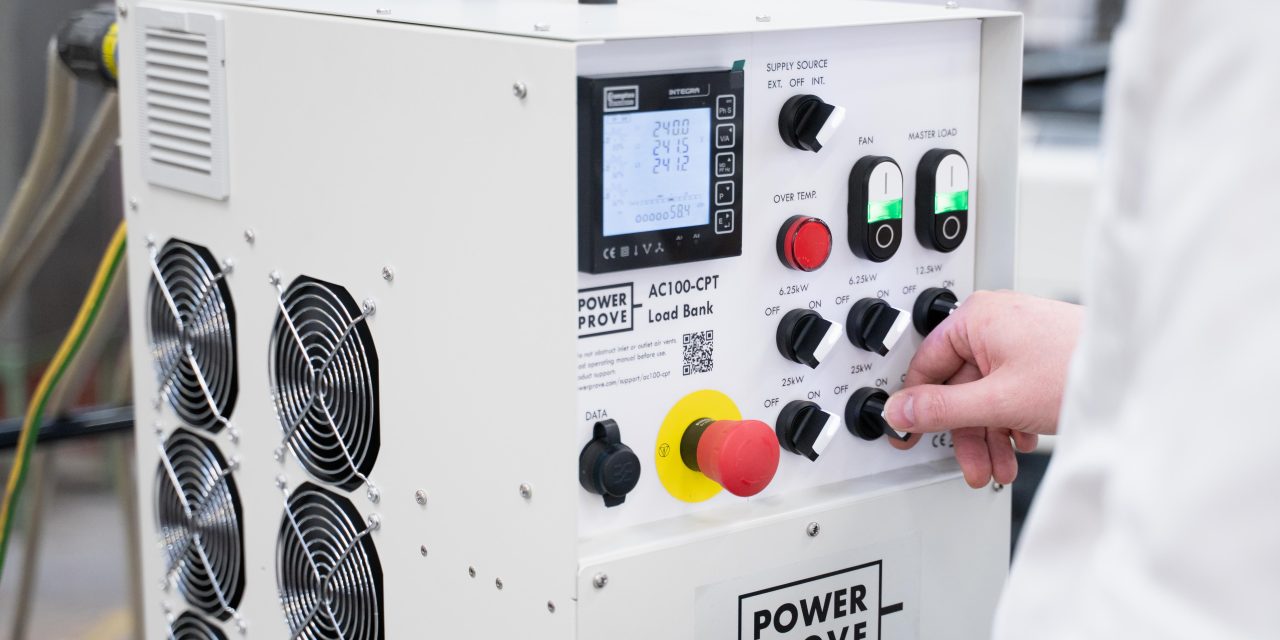
Load bank testing gives operators a clearer picture of how standby systems actually perform by applying a controlled electrical demand that mimics real-world use. By progressively increasing load, typically in stages up to full rated capacity, operators can evaluate alternator stability, voltage and frequency regulation, cooling system response and overall engine performance under continuous demand. This approach also helps to maintain combustion efficiency in diesel systems and reduce the risk of wet stacking associated with prolonged low-load operation.
For assets that spend most of their operational life on standby, periodic load bank testing provides an essential layer of assurance that cannot be achieved through routine exercise runs alone. It helps ensure that performance issues do not remain hidden until the point of failure, when the system is required to support critical infrastructure.
Power Prove provides AC load banks tailored to a range of standby power applications, helping operators validate generator performance under realistic site conditions and maintenance schedules.
As reliance on uninterrupted power continues to increase across critical infrastructure, structured load testing is becoming a more established part of preventative maintenance, and of long-term generator reliability.
Get in touch with the team today to learn how load bank testing can support the reliability and long-term performance of standby power systems.
Read other recent news: https://industrial-compliance.co.uk/category/news/