As Omniflex celebrates 60 years of engineering excellence, we are taking a look back at the decade that saw us really kick on and deliver major engineering projects – the 1970s, a decade of technological innovations that saw the invention of the first microprocessor, the development of personal computers and the adoption of mobile phone technology.
A decade of growth
By 1970, Conlog was part of commissioning large turnkey installations in major industries throughout South Africa, backed by equipment developed and manufactured in-house by South Africans for South African Industry.
Every process was contained in-house, all under one roof, from metal shop, tooling, PCB manufacturing, painting, draughting, panel building, engineering, commissioning, selling and marketing. The company was a hotbed of innovation and early technology adopters with a ‘we can do anything’ attitude.
What’s more, Conlog was an attractive place to work for keen and eager to learn engineers, recommended widely by engineering academics at South African universities and colleges who understood the importance of companies at the ‘bleeding edge’ to put to the test academic engineering theory and discovery.
Backed by an industry leader
The hype around Conlog in the early 70s did not escape the attentions of renowned Anglo American chairman Harry Oppenheimer, who went on to acquire 50 per cent of Control Logic in 1971. With funding for growth assured, the firm was propelled into industry in pursuit of South African solutions for industry.
With governmental policy shaped on self-sufficiency and developing local skills, Conlog was perfectly poised to engage in engineering projects of national interest.
With a strategic focus on the petrochemical sector as Sasol, Natref ventures started, Conlog embraced the challenge. The firm began work with Sasol, Natref and Eskom in the 1970s and remains a core technology partner for the major firms today. In fact, Omniflex recently completed the upgrade of critical alarm systems first installed in the 1970s for Sasol.
Mining was another key sector and Conlog helped to spearhead the industry’s adoption of automation and control, bringing cutting-edge technology to some of the world’s deepest mines.
No templates, no fear
From day one, the company was about listening, designing, tweaking and delivering exactly what the customer needed even when that meant pushing the limits of what was technically possible at the time.
This flexibility became Conlog’s hallmark and remains a core part of Omniflex’s culture today. This saw the company earn the respect of engineers across sectors and helped to establish Conlog as the go-to team for complex, high-stakes industrial automation.
A decade of success
1970: Alan Murray spearheaded the development of Speedocruise, an automotive product that allowed drivers to set a desired speed and it would maintain that speed by controlling the vehicle throttle via vacuum.
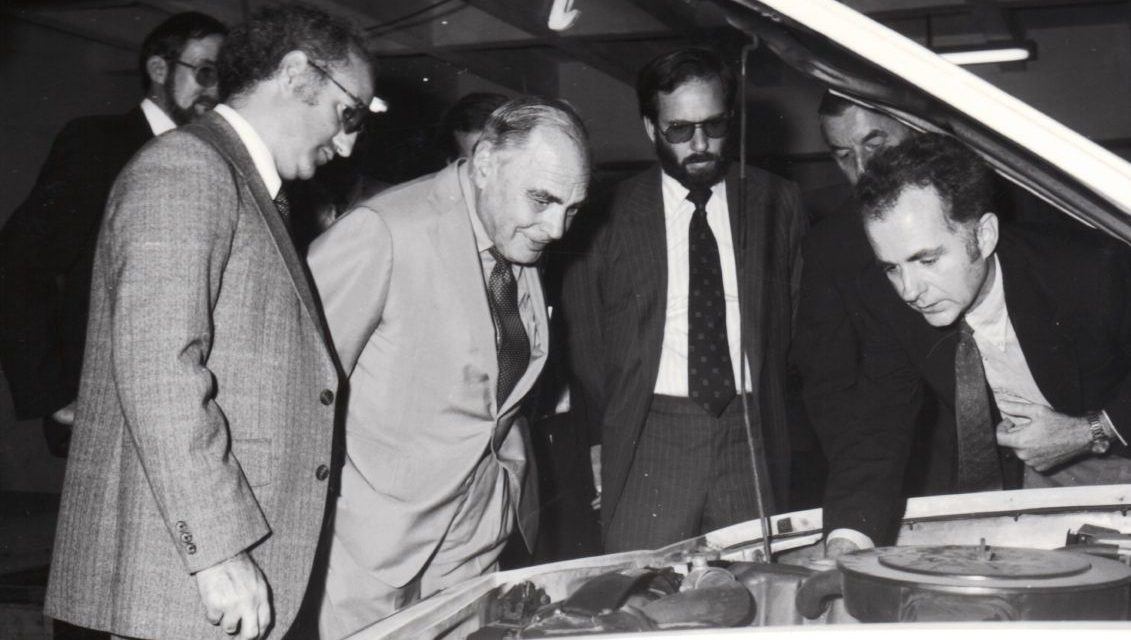
1971: Harry Oppenheimer, chairman of Anglo American, came to visit with some of his senior board. Anglo American acquired 50 per cent of Conlog, which set the trajectory of the company for the future.
1972: Opening of a sales office in Johannesburg with a focus on Mining, oil and gas, and power generation projects.
1974: Conlog introduced Struthers Dunn PLC to South Africa for automation control projects
1975: Conlog provided the control room instrumentation and plant interface for the Grootvlei Power Station contracted by Brown Boveri Babcock
1976: Work began on the Sasol 2 and 3 projects at Secunda under managing contractor Fluor. Conlog earned the position of the second largest subcontractor on site for the entire plant logic interface and alarm systems for the Honeywell Control System. David Celine, current Omniflex CEO, spent a year at Halliburton, USA, working on the plant interface engineering design.
1976: Also saw Conlog produce its own South African designed and manufactured logic controller – Microflex. This attracted much attention from the mining and process industries.
1978: Conlog provided logic systems and alarms for the Sasol Project. This ultimately saw the commissioning of over 20,000 critical alarms between the Sasol 2 and 3 projects.
To keep up to date with more stories surrounding Omniflex’s 60 years of innovation, subscribe to its LinkedIn Newsletter to receive updates directly to your inbox.
Read other recent news: https://industrial-compliance.co.uk/category/news/