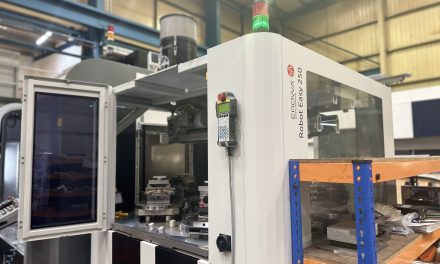
One year since the UK’s Modern Industrial Strategy was published, Geoff Cousins, chairman of leading international quality group G&P, examines what the strategy means for advanced manufacturing and sets out the practical steps manufacturers can take to turn policy ambition into operational improvement.
In June 2025 the UK government launched its flagship Modern Industrial Strategy, a ten-year plan to boost productivity, resilience and competitiveness for UK industry. In the 12 months since, this strategy has yielded significant results, including investment commitments worth over £35 billion and more than 25,000 new jobs.
For advanced manufacturing, this momentum is welcome. However, investment commitments alone will not resolve the pressures facing businesses on the ground. Manufacturers are still dealing with volatile supply chains, high energy costs, fierce international competition, changing trade requirements and a widening skills gap. The question, therefore, is not simply whether the strategy is ambitious enough, but how manufacturers can use it as a prompt to strengthen resilience.
The central role of advanced manufacturing
The Modern Industrial Strategy focuses on eight economic sectors with the highest growth potential, the “IS-8”. Among them is advanced manufacturing, covering critical industries such as automotive, aerospace and defence. The strategy aims to nearly double the annual business investment in this sector from the current £21 billion to £39 billion by 2035, with the goal to transform the UK into “the best place in the world to start, grow, and invest in advanced manufacturing”.
These are positive signals, but many manufacturers remain cautious. Nearly four in ten UK manufacturers expect the economy to deteriorate this year, and Make UK has highlighted a perception that the detail required to support firms to plan and invest is still missing. This is the critical point: funding creates opportunity, but manufacturers still need to translate policy into practical decisions about risk, quality, capacity and capability.
From policy to delivery
One year on from publication, the priority must shift from interpreting the Industrial Strategy to implementing it. Government has an important role to play in providing clarity on energy costs, trade compliance, skills and supply chain resilience. However, manufacturers cannot afford to wait for every policy detail to be resolved before acting.
The businesses best placed to benefit from the strategy will be those that use it as a framework for operational improvement. That means understanding where their production systems are most exposed, where supplier risk could affect quality or delivery, and where capability gaps could limit their ability to respond to change.
At G&P, we believe that resilience should be treated as a quality discipline as much as a procurement or cost issue. When disruption forces a manufacturer to change suppliers, substitute materials, alter production schedules or accelerate process changes, insufficient quality planning risks defects, rework, warranty exposure, customer disruption and reputational damage.
Therefore, these are five practical steps that manufacturers can take to ensure resilience in the face of disruption:
-
Map the risks that could stop production
Manufacturers should begin with a clear operational risk map. This should identify the suppliers, processes, components, logistics routes, energy dependencies and skills gaps that would have the greatest impact if they failed. The focus should not be limited to tier-1 suppliers. Risk often sits deeper in the supply chain, particularly where specialist materials, tooling, sub-components or technical knowledge are concentrated in a small number of businesses.
This mapping should be practical and prioritised. Manufacturers should identify the top risks to production continuity, quality performance and customer delivery, then assess how quickly each risk could be detected, escalated and contained.
-
Assess supplier resilience as rigorously as supplier cost
The Industrial Strategy rightly recognises the importance of supply chain resilience. However, resilience must be tested rather than assumed. Manufacturers should segment suppliers by risk, reviewing not only price and delivery performance, but also quality capability, process control, capacity constraints, financial stability, contingency planning and exposure to disruption.
Where risks are identified, businesses should consider targeted supplier audits, supplier development plans, additional quality gates or alternative sourcing strategies. Multi-sourcing and near-shoring can improve resilience, but they must be supported by robust qualification and inspection processes. Moving supply closer to home does not automatically reduce risk if quality systems, capacity or process controls are insufficient.
-
Make quality central to every operational change
Rising energy costs, higher employment costs and competitive pressure are forcing manufacturers to find new efficiencies. The British Industrial Competitiveness Scheme, which is due to cut electricity bills by up to 25% for more than 10,000 manufacturers from April 2027, is welcome. However, cost reduction programmes should not be allowed to weaken quality performance.
When manufacturers change processes, suppliers, materials or production locations, they should review whether their quality controls remain fit for purpose. That means validating revised process flows, updating control plans, reassessing inspection points, checking operator training and ensuring that any increase in production speed or reduction in cost does not create hidden failure modes.
-
Build flexible capacity before disruption hits
Manufacturers often only seek additional support once disruption has already affected output, by which point the commercial consequences can escalate quickly. A more resilient approach is to identify in advance where the business may need flexible quality or operational support during launch delays, supplier underperformance, production spikes, containment activity or quality spills.
Independent support can provide immediate additional capacity while internal teams focus on root-cause analysis and long-term corrective action. This is particularly important where quality teams are already stretched by new product introduction, regulatory pressure, customer audits or skills shortages.
-
Protect critical knowledge and build capability
The advanced manufacturing sector faces deeply interlinked workforce challenges, including an ageing workforce, rising employment costs and shortages in key technical skills. The government’s planned Technical Excellence Colleges are a positive step, but manufacturers also need to act internally to protect critical knowledge before it leaves the business.
This means identifying where essential process knowledge sits with a small number of experienced employees, capturing that knowledge in standardised work instructions, cross-training teams and reviewing whether current training programmes reflect emerging needs in areas such as AI, automation, digital twins and electrification. External expertise can also help bridge capability gaps while businesses invest in longer-term workforce development.
Quality management in practice
G&P is already helping advanced manufacturers respond to these pressures by providing independent quality expertise, operational support and supply chain assurance. Working across sectors including defence, automotive, aerospace and advanced manufacturing, G&P supports OEMs and suppliers with quality inspection, containment, supplier development, auditing and process improvement.
This support is particularly valuable when manufacturers are dealing with supplier disruption, launch challenges, skills shortages or rapid operational change. By helping businesses identify risk earlier, resolve issues faster and protect production continuity, specialist external expertise can provide vital additional capacity while manufacturers invest in longer-term transformation.
Crucially quality should be embedded into resilience planning, supplier assurance, process improvement and operational decision-making.
Next steps…
The Modern Industrial Strategy has created a valuable framework for growth, and its early investment commitments show that advanced manufacturing remains central to the UK’s long-term economic ambitions. However, the strategy’s success will depend on how effectively manufacturers convert policy direction into stronger, more resilient operations.
The businesses that act now to map risk, strengthen supplier assurance, protect quality performance, build flexible capacity and retain critical knowledge will be best placed to compete internationally. With the right combination of government clarity, industry action and specialist support, the UK has a genuine opportunity to build a more resilient, productive and globally competitive advanced manufacturing base.
For more information about G&P and its quality services, please visit www.gpqm.com.
Read other recent news: https://industrial-compliance.co.uk/category/news/