By Sarrina Crowley, marketing communications manager, Mettler Toledo
On a modern production line, contamination risks are not confined to a single checkpoint. They can enter from incoming ingredients, develop during processing or appear at final packaging. Managing those risks depends not just on having inspection equipment in place, but on how effectively detection is applied, monitored and maintained within everyday operations.
In practice, this requires a structured approach that combines the right inspection technologies with clearly defined processes, regular verification and accurate record-keeping. Central to this is the identification of critical control points (CCPs), where contamination risks can be most effectively monitored and controlled.
These points vary depending on the product, processing method and packaging format, meaning each production line requires a tailored strategy based on where hazards are most likely to occur and where detection will be most effective.
Identifying contamination risk across the production process
The first step is a detailed hazard analysis as part of a hazard analysis and critical control point (HACCP) plan. This involves mapping the full production flow and identifying where physical contaminants such as metal fragments, glass, bone or dense plastics could be introduced.
In many cases, the highest risk occurs at the start of production. Raw materials may contain foreign bodies introduced during harvesting, handling or transport. Detecting contaminants at this stage allows them to be removed before further value is added and helps protect downstream equipment from damage.
Processing stages can introduce additional risks. Equipment wear, such as broken components, can generate contaminants during production, while existing contaminants may become smaller or less dense. Inspection before and after processing helps manage these risks more effectively.
End-of-line inspection provides a final check before products leave the facility and can identify contaminants introduced during packaging or sealing. However, relying only on this stage may limit detection sensitivity and increase waste. A balanced approach often involves multiple CCPs across the line.
Choosing the right inspection technology
Selecting the appropriate inspection technology is critical. Metal detection and X-ray inspection are widely used, but each has different strengths and limitations depending on the product, process, packaging format and application.
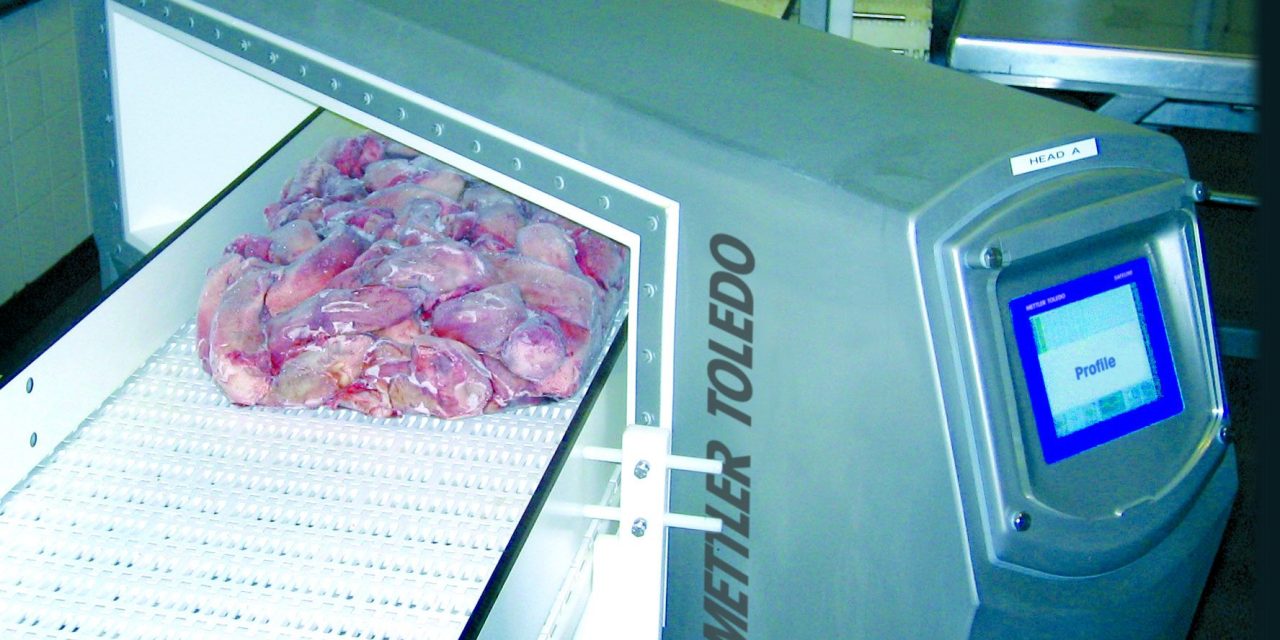
Metal detection is effective for identifying ferrous, non-ferrous and stainless-steel contaminants. The technology performs well with unpackaged products or those in non-metallic packaging, and can also be used in vertical applications, including free-falling products such as powders and granules. However, product characteristics such as moisture or salt content can affect sensitivity.
X-ray inspection offers broader detection capability, identifying physical contaminants such as metal, glass, bone, stone and dense plastics. It is also suitable for a range of packaging types and can carry out additional quality checks, including verifying fill levels, identifying missing components and detecting product trapped in seals. However, detection performance depends on differences in density between the contaminant and the product, meaning some lower-density contaminants can be more difficult to detect.
In many cases, combining both technologies across different CCPs provides the most robust solution.
Moving beyond installation to consistent performance
Installing inspection equipment is only the starting point. Systems must be correctly configured, validated and regularly verified to maintain performance over time. Factors such as product density, packaging format and production conditions all influence detection capability. Without proper set-up and validation, systems may operate below expected performance levels, increasing the risk of missed contaminants or unnecessary product rejection.
Industry standards and audit frameworks require more than the presence of equipment. They require evidence that systems are operating as intended, including defined critical limits, routine performance checks and documented procedures.
Common causes of non-conformance are often linked to how systems are used rather than the technology itself, such as testing outside normal production conditions or incomplete record-keeping.
Supporting compliance through structured processes
Maintaining compliance depends on embedding inspection into daily production routines, including validation, regular verification and ongoing monitoring. Modern inspection systems support these processes through guided workflows, automated test routines and integrated reporting. These features help reduce the potential for human error and make it easier to maintain consistent standards across production lines.
Accurate record-keeping is a key part of this. Digital data capture removes reliance on manual documentation and supports audit readiness by making information easier to retrieve and review. At the same time, controlled access and traceable system changes help maintain process integrity.
Building a stronger food safety culture
Technology alone cannot deliver consistent food safety. It must be supported by well-trained personnel and clear procedures. Professional installation and start-up support from the equipment manufacturer can help systems perform as intended from day one, while operator training gives teams the knowledge and confidence to use them correctly.
Operators need to understand how inspection systems work, how to carry out valid tests and how to respond when issues arise. Automation can support this by guiding users through testing procedures and highlighting deviations, but it must be used correctly and supported by a culture that prioritises food safety.
A practical, risk-based approach
Effective contamination detection depends on a structured, risk-based approach that combines the right inspection technologies with consistent process control and operational discipline. By identifying the right CCPs and maintaining clear validation, verification and monitoring procedures, manufacturers can manage risks earlier and maintain consistent product quality as part of everyday production.
For more information, download the guide to preventing physical contamination or visit www.mt.com/pi-contam-eguide-pr.
Read other recent news: https://industrial-compliance.co.uk/category/news/