The UK plastics industry turns over £23.5bn each year and employs 170,000 people, second only to food and drink manufacturing. If it is to continue to thrive it must not only retain this large workforce but also attract a pipeline of quality new talent – no mean feat when the sector is in the grip of an unprecedented skills shortage. Faced with a lack of candidates with proven plastics experience, one plastics company has taken a different approach to staff recruitment and retention. SME technical trade moulder Broanmain is investing in people with engineering skills who display a willingness to make a difference. The improvements to the business have been swift…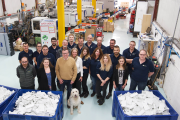
The scale of the problem
The plastics industry is suffering from a severe skills shortage – 92% of companies are ‘concerned’ or ‘very concerned’ about the lack of skills supporting their business, and 46% have reported difficulty recruiting. Add to this the fear that Brexit could see many of the 18,000+ EU plastics workers leave the UK, and it’s clear that businesses need to take action now to future-proof their operations.
The problem is being compounded by the fact that the skills shortage is not confined to one particular area of the workforce. Research from the British Plastics Federation found unfilled vacancies at every level, from apprentices and shop floor staff, to technicians, managers and engineers. Companies must therefore address not only their immediate vacancies, but also how the skills shortage is affecting the morale of their existing workforce, their business productivity, and their plans for future succession.
A different approach
Due to rapid business expansion, which saw turnover increase by 12.9% in just two years, Broanmain realised it needed to develop a senior workshop team with not just the right skills but also the right drive and ethos, if it was to continue to meet high customer expectation. As a result, in January 2017, the company adjusted its recruitment model, advertising for applicants with engineering skills rather than proven plastics industry experience. Process systems engineering graduate Maria Iglesias Lopez’s team building and problem-solving skills stood out during a day-long interview with Broanmain. However, the team knew that to get the best out of Maria it was essential that she undergo training specific to the task in hand.
On the job training
Six weeks after joining, Broanmain enrolled Maria onto Sumitomo (SHI) Demag’s UK Training Academy programme, which has just been awarded Skills Partner status by Cogent, the UK’s strategic body for skills in the life and industry sciences. Based in Daventry, the SDUK Academy offers high quality training to enable students with zero knowledge to attain a thorough understand of injection moulding. Over the course of just 18 months, Maria passed six assessments covering everything from trouble shooting to advanced injection moulding, supported by a structured on-the-job development plan. She is now the manager of Broanmain’s injection department and is making a tangible difference to the business, supervising five team members and increasing both productivity and sales.
The SDUK Academy courses are designed to be modular and offer a logical progression from basic settings to advanced process engineering. Since employing Maria and enrolling her on the programme, Broanmain has recruited another team member without knowledge of the plastics sector, as Operations Director Jo Davis explains: “We are keen to continue using this recruitment model and appoint people that fit our work culture. We plan to use the SDUK training facility to widen the expertise and depth of knowledge of our staff and increase workforce retention across our entire business.”
Dispelling the engineering myths
But why is it so difficult for companies like Broanmain to recruit and retain good staff? Wilf Davis, Broanmain’s Managing Director, believes that part of the reason is that engineering is undervalued as a career choice. “In Europe, engineers are respected in the same way as a doctor or lawyer. But the term ‘engineer’ has become diluted in the UK to mean anything from a washing machine repairer to a warehouse technician. This has created a stigma around engineering and a belief that it is a mundane, unskilled manufacturing job. In fact, the plastics industry needs people with a whole range of skill sets, from STEM ability to artistic and creative talents, who can make a real difference.”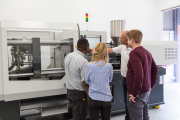
Maria concurs and says there are promising career opportunities within the plastics industry for young people with the right attitude and a willingness to learn: “The search for environmental solutions means that there are so many different agendas to tackle, opening up jobs in new research areas, such as understanding new materials and biodegradable plastics. There are literally thousands of career paths available once you have your foot in the door,” she stresses.
Move with the times
But some of the fault for the skills gap must also lie with the companies themselves. Broanmain is a family-run business with corporate sensibilities, taking its commitment to training and recruitment extremely seriously. Unfortunately, not every firm does the same. “Within injection moulding there are still a significant number of family-run firms that take a traditional approach to manufacturing, recruiting whoever is available in the workplace and, for many reasons, struggle to invest in technology and fresh knowledge,” says Jo. “But as global competition increases, these businesses are in danger of being left behind unless they adopt a fresh approach.”
Nigel Flowers, MD of Sumitomo (SHI) Demag UK, agrees: “Injection moulders today face unprecedented challenges, with increased competition and stretched resources. Skills shortages account for 30% of all manufacturing vacancies and we are acutely aware that this is especially prevalent in the polymer sector. We need to work together as an industry to share best practice and address the skills shortfall. Investment in training is imperative to succession planning, employee satisfaction, workforce retention and future business prospects. Through the SDUK Academy we are helping to address many of these challenges, and businesses that have taken part to date have reported tangible benefits.”
A brighter future
For Broanmain, investing in people is continuing to pay dividends and the company is a firm believer that its approach of nurturing and developing its own talent – rather than recruiting solely on past experience – is the way forward. “Many UK moulding companies seek experienced people and, in the face of a skills gap, this can make recruitment and retention of staff quite challenging,” says Jo. “By contrast, we saw an opportunity to appoint a person that fit our culture and who had the scientific understanding and enthusiasm to achieve tangible business improvements. It was definitely the right decision.”
As the new Chair of the BPF Moulders Group, Wilf is in full agreement that the onus is now on injection moulding firms to take advantage of the training available from centres such as the SDUK Academy and recruit for the future, not the past. “We have demonstrated the importance of taking a fresh perspective – recruiting people based on their eagerness to make a difference and then supporting them to succeed through quality training and on the job support,” says Wilf. “Due to our innovative recruitment, succession and training strategy, our business is no longer vulnerable to the skills shortage plaguing the rest of the industry. Additionally, it’s enabled us to become a Living Wage employer and provide our team with high quality progression opportunities.”