The UK construction industry remains at a health and safety standstill. Alarming statistics show a 12 per cent increase in accidental worker deaths since 2021/22. The total number of workplace injuries reached 60,000 in 2023/24, mirroring the previous year. These injuries come at a staggering economic cost of £1.3 billion annually. Malcolm Mearns, SHEQ director at ground engineering and subsidence specialist Geobear, believes the sector is overlooking a critical factor: culture.
Around 2.6 million working days are lost in construction each year from workplace injuries and work-related illness. While the industry advances in technology, health and safety still lags behind. Applying maturity models that develop interdependent work cultures can help reduce accidents across the sector.
Maturity models that work
The connection between occupational safety and company culture maturity is not new. One of the earliest and most well-known models to address this was the Bradley Curve, introduced in 1995 by Berlin Bradley at DuPont. The model outlines four distinct phases of safety culture development: reactive, dependent, independent, and interdependent.
At the reactive stage, organisations typically experience frequent accidents, low safety awareness, and limited engagement. Here, compliance is often driven by fear of disciplinary consequences rather than genuine concern for colleagues.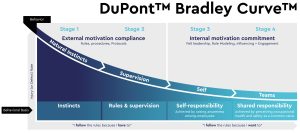
The interdependent stage, however, paints a different picture: a workforce actively focused on safety. They share values, build trust, and collectively own the responsibility for everyone’s well-being. During this phase, safety becomes a natural part of the company’s culture, with motivation springing from a place of mutual concern, not just from outside mandates. A shift in culture that produced a low incident rate.
Other models, such as Hudson’s Safety Culture Ladder and the HSE Maturity Model, echo similar principles, emphasising that improvements in safety outcomes are best achieved by elevating company culture.
The question is, how can this be done? Since integrating a tailored safety, health, environment and quality (SHEQ) training program that aligns with its specific company values, Geobear has seen a 45 per cent decrease in workplace accidents when comparing quarterly figures from 2024 to 2025.
It combined external safety protocols with internal values-based education, helping staff develop not just knowledge, but awareness, ownership, and pride in safe practices. Employees began to internalise safety as a shared goal, transitioning from rule-followers to proactive participants in risk mitigation.
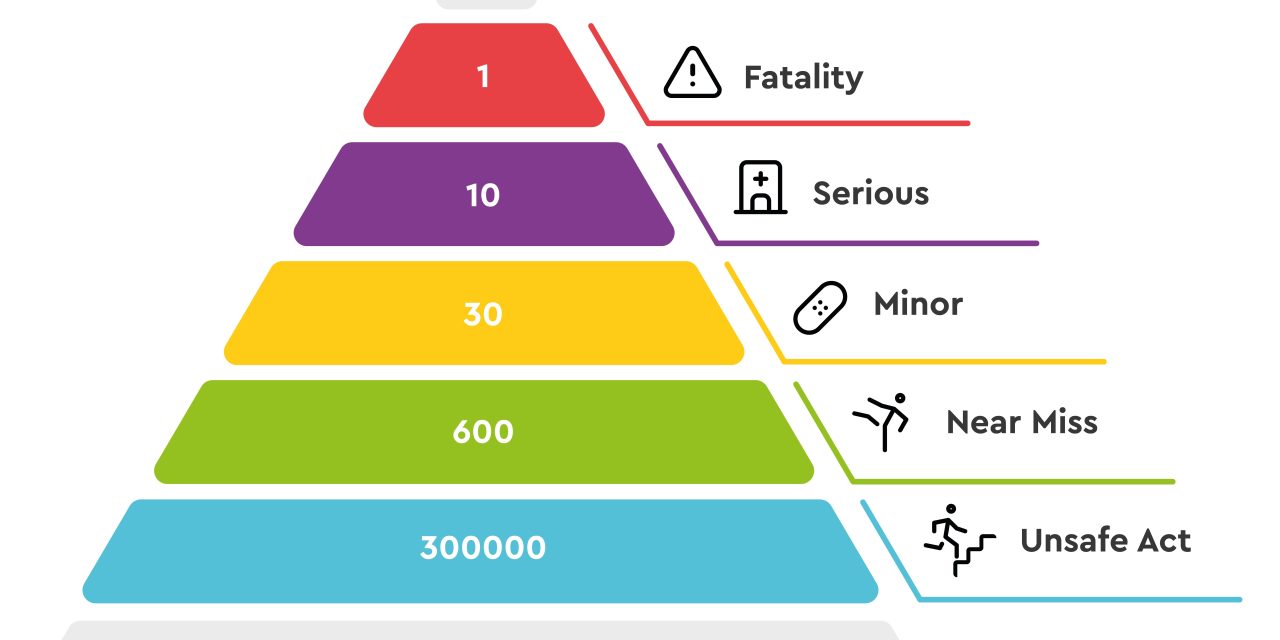
Evidence of such can be shown by an increase in hazard reporting. The Bird Triangle, a predictive safety model that suggests that for every major injury or fatality, there are thousands of near misses and unsafe acts leading up to it. Specifically, it suggests for every serious incident, there are 300,000 unsafe behaviours contributing to the risk.
By creating a culture that rewards hazard reporting instead of punishing it, you encourage more reports. This leads to earlier intervention, which reduces the chances of unsafe acts and ultimately the risk of fatalities
Rehumanising management
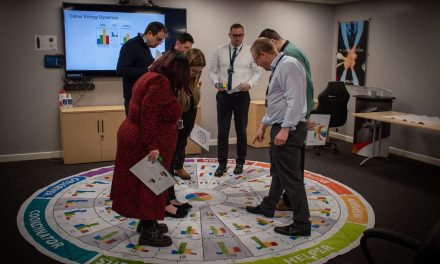
In early 2025, Geobear introduced a new initiative called “A Day in the Life”, where managers step into the shoes of operational workers at least four times a year. This approach allows leadership to experience day-to-day project works.
This approach allows leadership to experience day-to-day project work, with the aim of identifying site-level issues, enabling direct communication with on-site staff, and building greater respect across all levels.
This initiative has already shown to break down communication barriers. Workers feel heard, while managers gain first-person insight into challenges that paperwork fails to demonstrate. It has led to more regular and meaningful site visits, helping to identify and remove “blockers” that might otherwise go unnoticed.
What more can be done
There are a few easy ways for companies to produce an interdependent company culture to improve health and safety.
One way to do so is by introducing peer-to-peer audits, where individuals assess and provide feedback on the performance, work or combination of their peers. It involved the review and appraisal of a peer’s work based on predetermined criteria or standards. This approach provides real-time feedback, while positive peer recognition acts as a motivator for safe practices and reinforces appropriate behaviours.
Before starting work project managers/team leaders (supervisors) deliver a daily five-minute talk focused on safety, health, environment, and quality risks and controls to keep these topics at the forefront of daily operations. These talks may also address specific hazards, share lessons learned, or provide general safety reminders.
Organisations should go beyond top-down safety directives by including site teams in risk assessments and method statements. When employees help shape the rules, they’re more likely to follow them and hold others accountable too.
Building brilliant careers
Inclusivity is an important aspect of safety culture. A safe workplace is also one that welcomes diverse perspectives and backgrounds.
Over 12,400 UK organisations have signed the Armed Forces Covenant. The Covenant aims to support members of the Armed Forces community in the workplace, offering opportunities for veterans and reservists who bring discipline and situational awareness to high-risk environments like construction.
Construction companies are already making this step. Morgan Sindall Construction, for example, has just been awarded the Defence Employer Recognition Scheme (ERS) Silver accreditation under the Armed Forces Covenant.
The first and largest step to a safer workplace is reshaping workplace culture. This involves implementing maturity models like the Bradley Curve to progress from reactive compliance to an interdependent culture where colleagues actively look out for one another. Through initiatives like “A Day in the Life” and encouraging hazard reporting, organisations can integrate safety into daily operations.
Find out what you can learn from the way geotechnical contractors such as Geobear are leading the industry in the best practises for safety processes.
Read other recent news: https://industrial-compliance.co.uk/category/news/