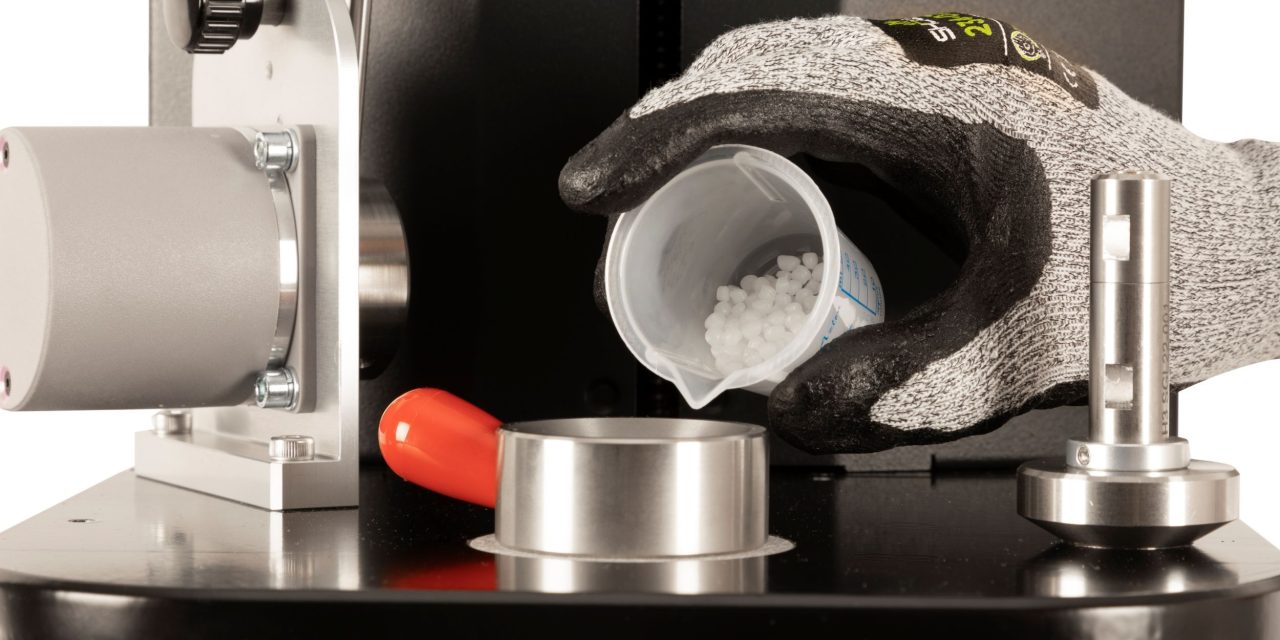
Legacy systems are not simply older machines operating more slowly. In many laboratories, testing workflows gradually evolve around the limitations of ageing instruments rather than the actual needs of the process. Small inefficiencies become accepted routines, repeated tests become normal practice and operator workarounds quietly replace process consistency. Here, Fabio Lipari, materials engineer for melt flow testing solutions at Instron, discusses how ageing melt flow testers can quietly affect repeatability, consistency and operational confidence across modern polymer laboratories.
Legacy melt flow testers rarely fail suddenly. More often, problems build slowly through repeated tests, inconsistent results and growing downtime. Over time, laboratories adapt to these issues until inefficient workflows become part of daily operations.
Many polymer laboratories do not immediately recognise when ageing equipment begins affecting performance, even as manufacturers face growing operational pressure from downtime and disruption.
Siemens’ The True Cost of Downtime 2024 report estimates that the world’s 500 largest companies lose around eleven per cent of annual revenues because of unplanned downtime. Although melt flow testing represents only one part of a production process, delays in testing can still affect material validation, production schedules and product release.
Why legacy systems become a hidden operational risk
One of the main issues with ageing melt flow testers is that performance decline is usually gradual. Prolonged use can introduce thermal instability, making calibration more difficult to maintain over time.
Cleaning procedures can create additional strain on older systems, particularly when processing difficult materials, such as sticky polymers or high temperature-resistant polymers like Polyether ether ketone (PEEK). Repeated manual cleaning at high temperatures using special tools like metal brushes can slowly lead to wear over time.
Obsolescence creates another challenge. Older electronics and replacement components may no longer be readily available as manufacturers transition towards newer technologies.
For facilities relying on a single melt flow tester, downtime can quickly affect validation schedules and shipment timelines.
When “normal frustrations” become accepted workflows
Many testing teams become accustomed to the limitations of older systems without recognising the wider operational impact. Operators may repeat tests to confirm inconsistent results or allow extra time for setup, cleaning and recalibration. Eventually, these additional steps become embedded within routine workflows without really stepping back to appreciate how much time is being wasted.
Repeatability problems often begin with small inconsistencies rather than complete system failure. Manual compacting can introduce variation depending on operator technique, timing and applied force. Over time, these small differences during sample preparation can affect material flow behaviour, making results harder to reproduce consistently between operators, shifts or testing locations.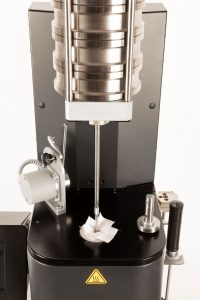
In many facilities, ageing systems continue functioning because experienced operators know how to work around their limitations. As a result, consistency becomes increasingly dependent on operator experience rather than the process itself.
The real cost of poor repeatability
For polymer testing teams, repeatability is often more important than testing speed. Melt flow testing is used to validate material properties, compare formulations and confirm compliance with specifications. If results cannot be reproduced consistently, confidence in the data begins to weaken.
Many also rely on historical comparison data. Operators need assurance that results generated today remain comparable with data collected months or years earlier. Variability introduced through ageing equipment or inconsistent workflows can complicate that comparison.
When results cannot be reproduced reliably, testing teams may need to repeat validation work, delay batch approval or investigate whether variation originates from the material or the testing process itself. This can slow formulation development, increase material waste and create uncertainty during quality control, particularly when multiple operators or sites are involved.
ASTM D1238 and ISO 1133 both place strong emphasis on repeatability and thermal stability, making consistent long-term performance increasingly difficult to maintain with ageing systems.
Automation reduces operator dependency
Newer melt flow testing systems are increasingly focused on reducing manual intervention and improving consistency between operators. Systems such as the MFi7 equipped with a motorized weight lifter were developed specifically to improve repeatability while reducing the introduction of operator error through automated workflows.
Automatic compacting and purging systems help reduce variation introduced during sample preparation by applying a controlled force during both pre-heating and purging. According to Instron MFi Series performance data, this can improve repeatability by up to 50 per cent.
Other automated features are designed to reduce unnecessary delays during testing. Instron states that its automatic die-plug opening device can save up to five minutes per test by simplifying preparation during high-flow material testing. Automatic air bubble detection can also reduce the time spent manually correcting outliers by up to 33 per cent by automatically identifying and discarding inconsistent data points.
Many newer systems are also designed to reduce common setup mistakes. Instron’s patented Manual Mass Selector uses an integrated sensor to detect incorrect mass selection and alert the operator through the touchscreen interface. Real-time MVR graphs also allow operators to identify abnormal behaviour before a test has finished, helping reduce wasted testing time.
User experience is part of instrument performance
Usability has become an increasingly important part of melt flow testing performance. The goal is not simply faster testing, but reducing unnecessary variation while making day-to-day operation easier.
Touchscreen interfaces and guided workflows help standardise routine testing activities. Patented smart method creation tools simplify setup through guided parameter creation.
Live help functionality supports day-to-day laboratory operation by providing guidance directly through the interface. According to Instron data, these features can reduce training time by more than 70 per cent while helping minimise downtime caused by user uncertainty.
Data management has also improved compared with many legacy systems. Modern instruments can store methods and results directly on the machine while supporting software integration through Bluehill Melt Software.
Upgrading is no longer just about replacing hardware
For many testing teams, upgrading a melt flow tester is no longer simply a hardware replacement decision. Increasingly, the decision is driven by operational reliability, data confidence and long-term supportability.
Out-of-production systems often face restricted software updates, reduced technical support and limited parts availability. As equipment ages, sourcing replacement components can become increasingly difficult, creating uncertainty for laboratories that depend on predictable uptime and reliable testing schedules.
Manufacturers are continuing to invest in connected operations. McKinsey & Company has reported that manufacturers implementing Industry 4.0 technologies have achieved labour productivity improvements of between 15 and 30 per cent, increasing pressure on laboratories to support more connected workflows.
Some laboratories remain hesitant to upgrade because of concerns around retraining and workflow disruption. Operators who have used the same system for many years may question whether newer instruments will require extensive retraining or affect historical data comparison.
Many modern systems are designed specifically to simplify implementation. Compatibility with legacy accessories can help laboratories preserve parts of their previous investment, while guided workflows and simplified parameter creation support easier adoption across teams.
The biggest risk with legacy systems is how easy they are to tolerate
One of the biggest challenges with legacy melt flow testing systems is that laboratories often adapt around their limitations without fully recognising the long-term impact. Repeated tests and manual workarounds slowly become embedded within routine workflows.
What initially feels manageable can slowly affect productivity, confidence in results and operational resilience. Newer systems are increasingly designed to reduce unnecessary variability and minimise reliance on manual intervention.
The question is no longer whether a legacy melt flow tester still works. It is whether the system still supports the consistency, confidence and operational demands modern polymer testing now requires.
Read other recent news: https://industrial-compliance.co.uk/category/news/