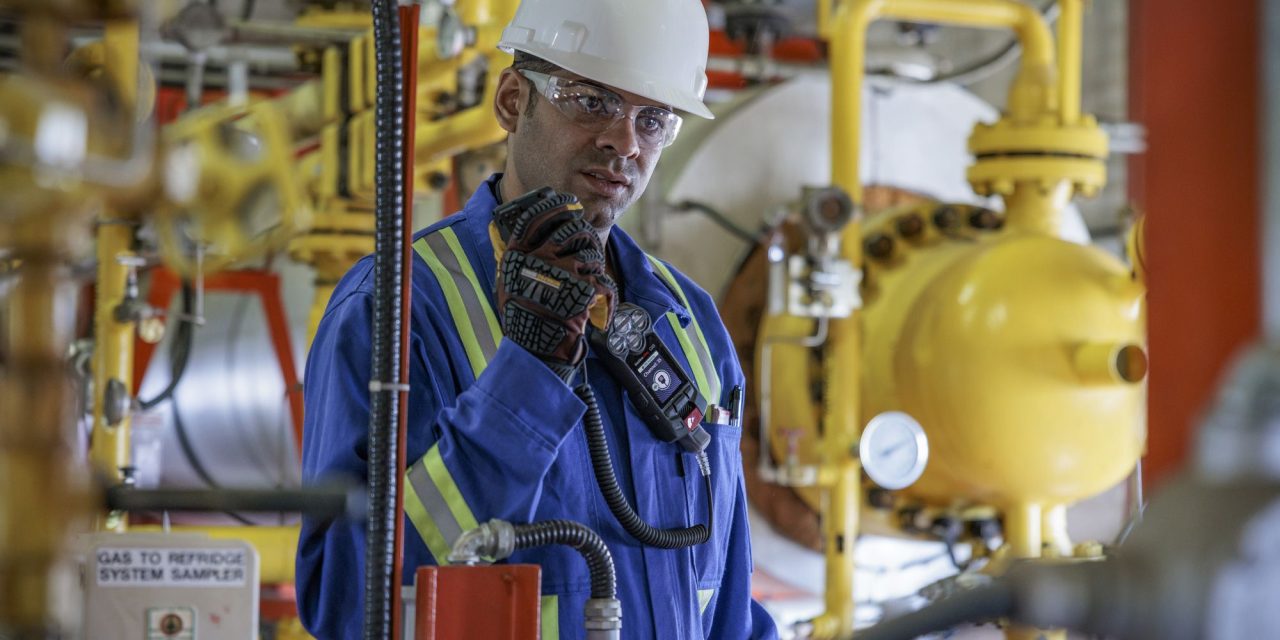
Blackline Safety has announced G8, a connected safety wearable combining advanced gas detection, lone worker protection and radio-quality communication in one rugged device. It connects workers to each other, their safety teams and the broader digital worksite, streaming real-time data to the cloud to keep safety and operations leaders informed. Industrial Compliance caught up with the company to find out more.
Q. Blackline Safety has described G8 as the “most connected safety wearable ever made”. What was the vision behind developing G8 and what challenges in industrial safety were you aiming to address?
Our vision for G8 was to continue pushing toward the world’s most connected safety wearable, while addressing persistent gaps in industrial safety, especially around protecting lone workers, who I see as the last frontier of safety. A key focus was increasing awareness of risk in real time—powered by our cloud-based software platform Blackline Live—which provides continuous visibility into people, environments and potential hazards as conditions change.
Just as important was ensuring the device is trusted and something teams actually want to wear every day. Disconnected devices often get ignored or turned off, undermining safety programs. With features like a built-in flashlight and Push-to-Talk (PTT) communication, G8 is designed for usability and to integrate naturally into people’s daily workflows.
Q. The G8 connected safety wearable builds on the foundation of the company’s G7 line. What were the key lessons learned from previous generations that shaped its development?
G7 was revolutionary as the first cloud-connected safety wearable and has been trusted by thousands of companies and workers globally.
With G8, we were looking to deliver an enhanced user experience through features like dedicated PTT buttons directly on the device, a larger and brighter interface, and TagAssign where workers just tap their NFC tag to a G8 and they’re automatically connected and ready to go. These improvements ensure G8 is not just more advanced, but also more intuitive, faster and practical for people as they go about their workday.
Q. Can you tell us more about the sensor technology behind G8 and the advantages of the swappable cartridge system covering more than 20 gases?
G8 builds on the same advanced sensor portfolio as G7, which is one of the most comprehensive in the industry. The swappable cartridge system, which supports detection for more than 20 gases, is designed so customers can match their specific gas hazards to the environment. This flexibility is especially valuable for large enterprise customers who can standardise their safety programs across multiple sites globally while still adapting to localised risks. And it ensures workers can be protected against the hazards most relevant to their roles.
Q. Lone worker protection is a critical issue in industries such as oil and gas, utilities and manufacturing. How does a connected safety wearable such as G8 enhance protection compared with traditional standalone devices?
With G8, safety managers see not just a dot on a map showing where a lone worker is, but also when they need help and the context behind it. That’s because unlike traditional standalone devices, G8 provides multiple ways to communicate directly with workers, including through our in-house Safety Operations Center staffed with trained professionals. This is critical, as understanding risk often requires real-time conversation and context. If a worker cannot respond, that in itself becomes an actionable alert. Additionally, G8 delivers analytics that can identify risk patterns and improve lone worker safety outcomes over time.
Q. Communication appears to be a major focus of the G8 platform, with push-to-talk, emergency voice calling and text messaging all integrated. How does this improve both emergency response and day-to-day productivity on site?
Human-to-human communication is central to the G8 platform, because in an emergency nothing beats a real voice checking in. There’s three ways to communicate via the device, through Emergency Voice, text messaging and PTT. Unlike traditional walkie-talkies, which are constrained by range, with G8’s PTT workers can radio with a colleague anywhere in the world for $15/month. This not only improves emergency response times but also helps teams collaborate more easily to keep work moving.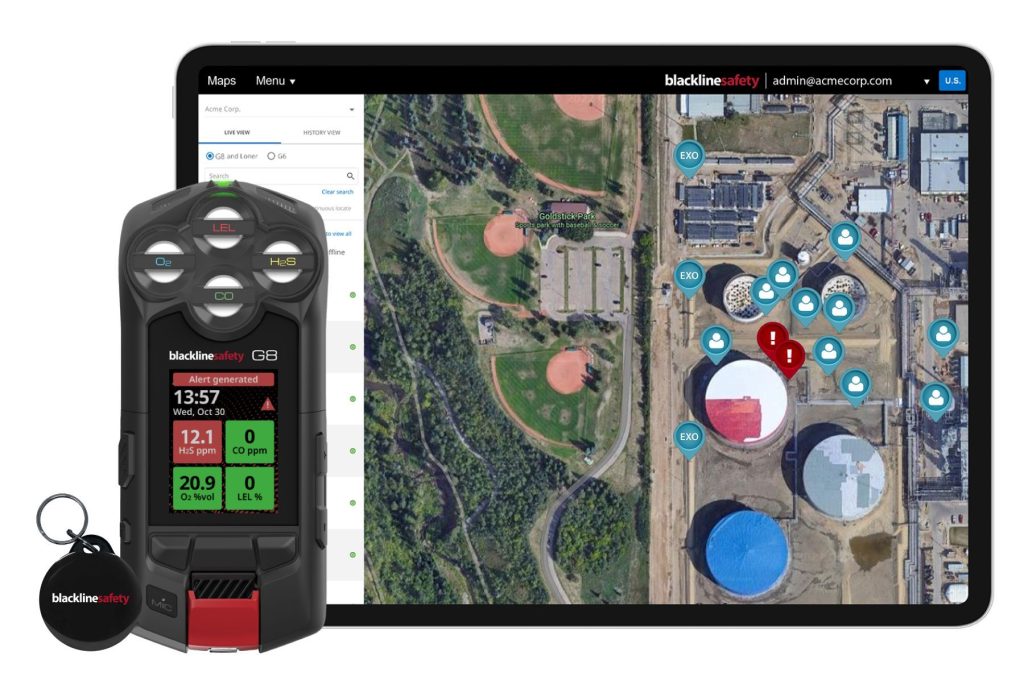
Q. Industrial environments are extremely noisy and challenging. What design considerations ensure the connected safety wearable’s speaker, microphone and alerts remain effective in these conditions?
Industrial worksites are often loud and chaotic, so ensuring clear communication was a top priority in G8’s design. Blackline completely redesigned the audio system to deliver louder, richer sound that can cut through high-noise environments. This includes an optional remote speaker microphone for PTT that rivals the sound quality of any industrial radio. The goal with this enhanced audio and clarity was to continue to improve worker confidence in the reliability and performance of the device.
Q. The device streams real-time data to the Blackline Live cloud platform. How does access to live data change the way safety managers monitor worksites and respond to incidents?
With access to live data—like sensor readings, status updates and location—teams can see what’s happening in the moment and spot potential risks before they turn into incidents, including catching exposure events early. Through cloud-based platforms, like Blackline Live, they can also share that information easily and quickly with other stakeholders (like government agencies) to help manage the response.
Q. Beyond safety, what operational insights can organisations gain from the data generated by a connected safety wearable such as G8?
Connected devices constantly stream while they’re being used in the field. In the case of G8 (actually all our devices), Blackline Analytics organises this information automatically into a series of reports that help safety teams manage compliance, understand usage, identify trends, uncover inefficiencies and make more informed decisions This data supports predictive planning, allowing companies to anticipate potential issues before they escalate into incidents.
Over time, these insights can drive improvements not only in safety outcomes (through, for example, better training or signage) but also in overall operational performance and culture. By turning real-time data into actionable intelligence, connected devices like G8 help organisations shift from reactive responses to more proactive approaches.
Q. Finally, what industries or applications do you expect will benefit most from G8, and what feedback have you received so far from early users or partners?
I always say that anyone wearing coveralls or PPE can benefit from real-time access to help and connected safety capabilities. Plus, access to hard data, which our platform delivers, allows safety managers to better understand and mitigate risks. The results will be stronger overall safety programs and greater confidence among their people about the safety of their worksites.
Early feedback has highlighted the value of having a compact, reliable and multi-functional device with enhanced communication features.
Read other recent news: https://industrial-compliance.co.uk/category/news/