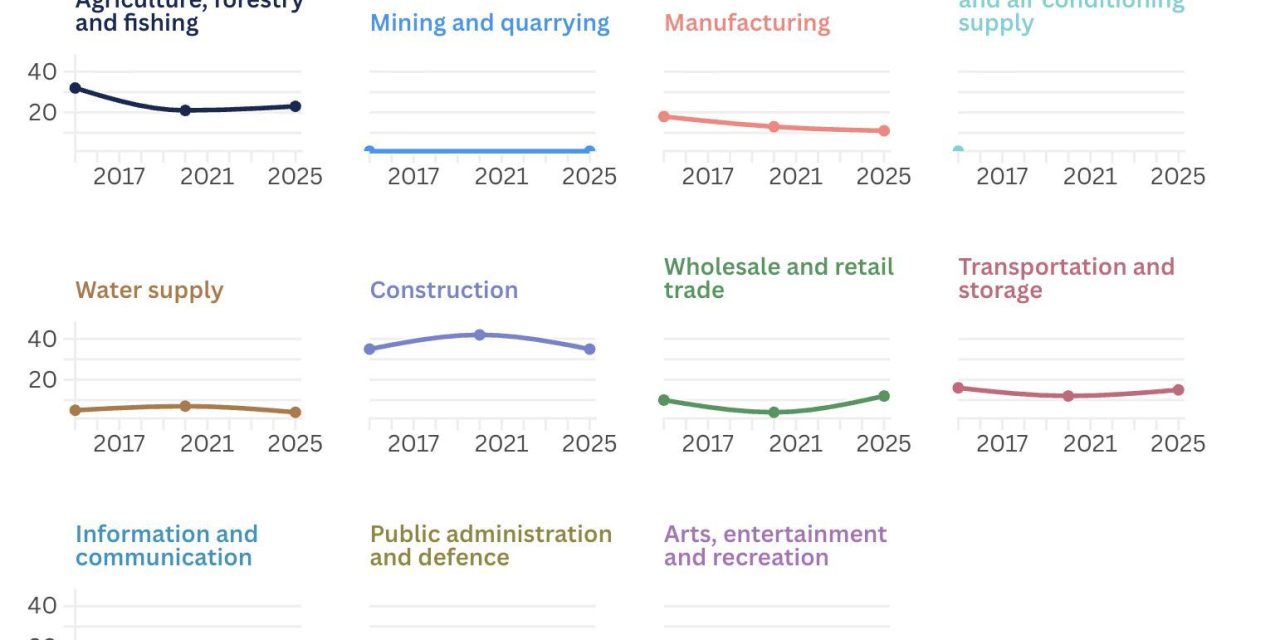
New analysis from Astutis of workplace fatality data over the past decade reveals that the ‘Manufacturing’ job industry sector has made the biggest improvement in HSE, cutting fatalities by 39% compared to 2014/15.
‘Agriculture, Forestry and Fishing’, one of the UK’s most historically dangerous sectors, has ranked as second best at decreasing fatalities since 2014/15, with a 28% fall in fatalities.
However, this industry still carries a high overall risk with 23 fatalities recorded in 2024/25.
The research by workplace training provider, Astutis, discovered that the third biggest decline is the ‘Water supply, waste management and related activities’ industry, reducing fatalities by 20%, while ‘Transport and Storage’ has seen deaths fall slightly by 6%.
Meanwhile, Mining and Quarrying has remained level, showing neither increase nor decrease in fatalities.
By contrast, construction continues to report the same number of deaths as a decade ago, 35 annually, demonstrating a troubling lack of improvement despite technological advances and greater safety awareness.
Brenig Moore, Technical Director at Astutis, said the findings show that progress is possible, but only with consistent investment in modern safety cultures:
“Manufacturing and agriculture prove that change can happen. These sectors have historically been among the most hazardous, yet their reductions demonstrate the power of embedding rigorous safety practices and modern management systems.
On the other hand, industries like construction show how entrenched practices and failure to adapt can leave fatality rates stubbornly high.”
Brenig added that the lessons from sectors with fewer fatalities need to be applied more broadly:
“The nature of workplace risk is changing, with factors like fatigue, stress, lone working, and new technologies creating challenges across every sector. Simply meeting compliance standards is no longer enough; businesses need to go further by building safety cultures that are proactive, accountable, and centred on protecting their people.”
The findings suggest that while high-risk sectors are beginning to benefit from improved safety management, every industry, including those not traditionally associated with danger, must take action to protect employees and prevent fatalities.
Read other recent news: https://industrial-compliance.co.uk/category/news/