Every summer, the industry is facing the same challenge: unpredictable temperatures and completely predictable pressure on cooling systems.
As heat loads rise, your equipment works harder, runs longer, and carries more of the production burden. And when that happens, any weakness in your cooling infrastructure becomes impossible to ignore.
If you’re running a manufacturing line, food processing facility, chemical operation, or pharmaceutical environment, you know a cooling failure isn’t a minor technical issue. It’s a businesscritical event. It can shut down production, compromise product quality, and eat into margins almost instantly.
At ICS Cool Energy, we see this pattern across the industry every year. Summer doesn’t cause cooling problems — it simply exposes the weaknesses in the system. The facilities that stay resilient aren’t the ones with the biggest equipment; they’re the ones that understand their vulnerabilities and plan ahead.
Here are the five questions you should be asking now, before temperatures climb.
How resilient is your equipment when you actually need maximum performance?
Summer exposes whether your plant is built for peak load or merely coping through cooler months. If your chillers or cooling systems are 8 years or older, running close to capacity, or lacking consistent maintenance, they may struggle when ambient temperatures rise.
Modern systems with improved efficiencies and builtin intelligence perform differently. They don’t just run; they respond, helping reduce both operational risk and running costs.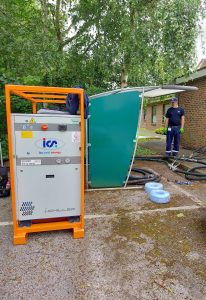
What is your contingency plan?
What happens inside your plant if cooling fails at 3 p.m. on a peakproduction day?
This is the real question — and one many sites can’t confidently answer.
A credible contingency plan isn’t about having a document on file. It’s about having the ability to act immediately. That means knowing:
- How quickly temporary cooling can be delivered and connected
- What electrical and hydraulic interfaces are required
- Whether you can supplement load before a peak hits
- Who makes decisions and who executes them
Manufacturers should treat temporary cooling as part of their strategic capacity, not just emergency response. It stabilises production, supports planned works, manages seasonal demand without overcommitting to permanent plant, and ensures your operations don’t hinge on a single point of failure.
Do you know how your cooling system is performing right now — or are you waiting for alarms?
You can’t manage what you can’t see. If you can’t see how your system is performing, you can’t control it.
Data makes cooling predictable. Without live, data-driven insight, your first indication of a problem may be a temperature rise or process disruption already underway.
Remote monitoring and realtime performance data give you the control you need to prevent issues instead of reacting to them. This allows issues to be resolved before they impact production and increase your downtime.
Is your maintenance strategy designed for performance or just compliance?
There is a fundamental difference between basic servicing and performancedriven maintenance.
Compliance ensures your system meets minimum standards. Performance optimisation ensures it survives summer.
A proactive approach should include:
- Presummer readiness assessments
- Performance optimisation and verification that your cooling capacity aligns with actual process load
- Cleaning and efficiency improvements
Well-maintained systems don’t just last longer — they perform better, use less energy, and are far less likely to fail under pressure. Small improvements in maintenance can mean major improvements in reliability and efficiency when heat arrives.
When did you last validate your water quality or glycol levels?
Water quality is one of the most common — and most overlooked — root causes of cooling underperformance. Corrosion, scale, bacterial growth, and incorrect glycol levels quietly erode system efficiency and reliability over time.
In many cases we diagnose, the symptoms appear in summer, but the cause began months earlier.
Routine water treatment and glycol management isn’t optional. It protects your equipment and overall plant performance — especially when your cooling system is pushed hardest.
Looking at the bigger picture
Cooling is no longer a background maintenance task, it is a strategic, businesscritical function that directly affects production stability, product quality, and operational cost. Across industry, more organisations are moving away from stale, equipmentonly thinking and adopting a more flexible, resilient model that blends:
- Permanent cooling infrastructure
- Temporary or supplementary capacity to absorb peaks and planned and unplanned works
- Proactive service, performance optimisation, and continuous monitoring
This integrated approach doesn’t just prevent downtime, it strengthens operational resilience, improves efficiency, and helps businesses avoid unnecessary capital expenditure by deploying the right capacity at the right time.
Final thought
Summer doesn’t cause cooling failures, it exposes them.
The organisations that stay productive under pressure are the ones that prepare early, understand their vulnerabilities, and partner with specialists who can help them build a forwardlooking, datadriven cooling strategy. Resilience isn’t built in July; it’s built now.
Read other recent news: https://industrial-compliance.co.uk/category/news/